Every growing engineering org eventually builds a spreadsheet of services. Then someone updates the spreadsheet. Then someone else doesn't. Six months later, the spreadsheet is the least reliable source of truth in the organization.
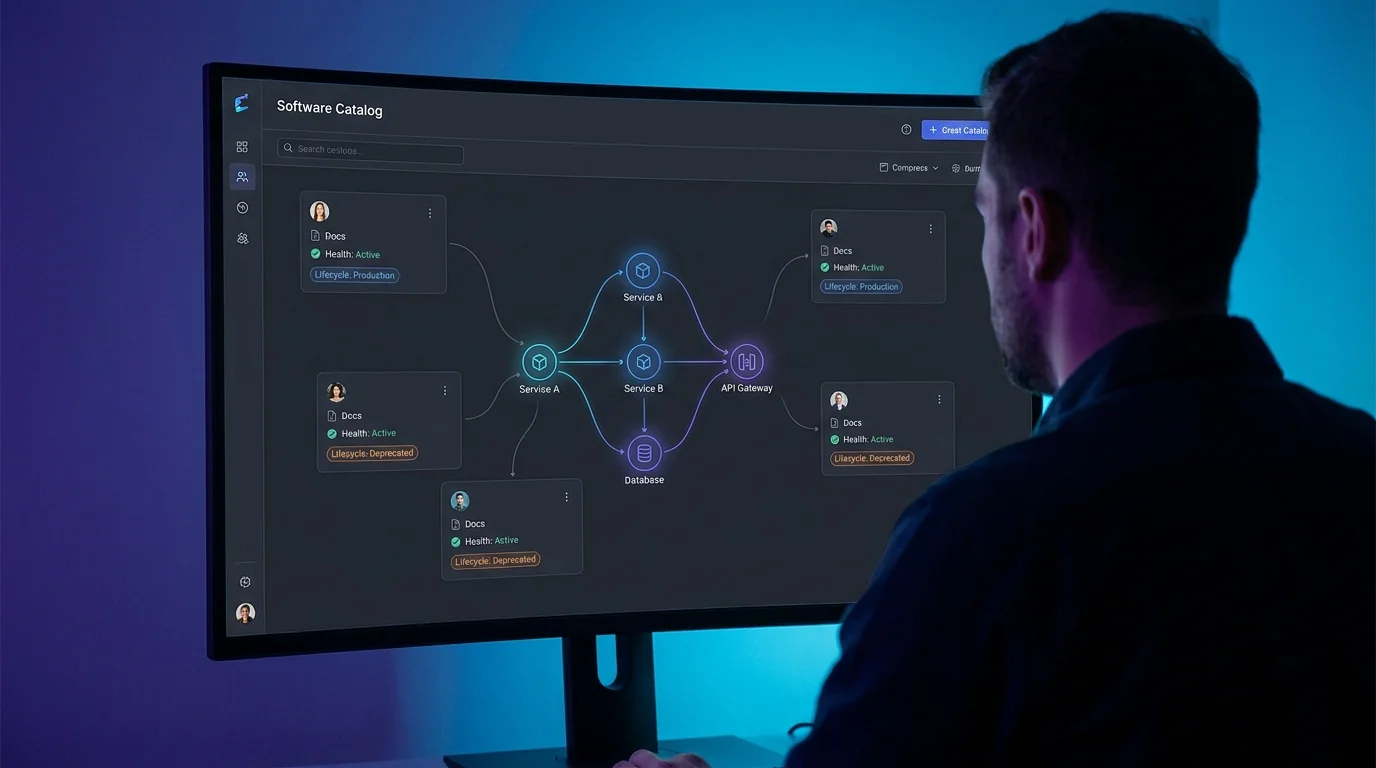
VibeControls Catalog is different because it's connected to the work surface. Services are registered as typed Component entities (Service, API, Library, Resource, Job, Workflow) with ownership, lifecycle state, documentation links, and dependency relationships. Components can be linked to the active Vibes where developers are working on them.
When an engineer updates a service's Vibe — changes environment variables, updates documentation, runs actions — the catalog entry reflects the living state of the service. The dependency graph shows at a glance how services relate: which APIs call which backends, which libraries are shared.
Impact analysis becomes possible: "if I change this API contract, which downstream services does it affect?" The catalog answers that question from the dependency graph — not from asking everyone in a Slack thread.
Lifecycle states (active, deprecated, retired) give your org a structured way to manage technical debt.
Do it yourself
Register your services as typed, owned components with lifecycle states, map their dependencies on a live graph, attach docs and quality scorecards, and organize everything into a shared catalog.
Open Components and click Create. Give your service a name and pick its entity type — Service, API, Library, Resource, Job, or Workflow.
You should see: A new typed component appears in your catalog with the kind you selected.
Ready to make this your story?